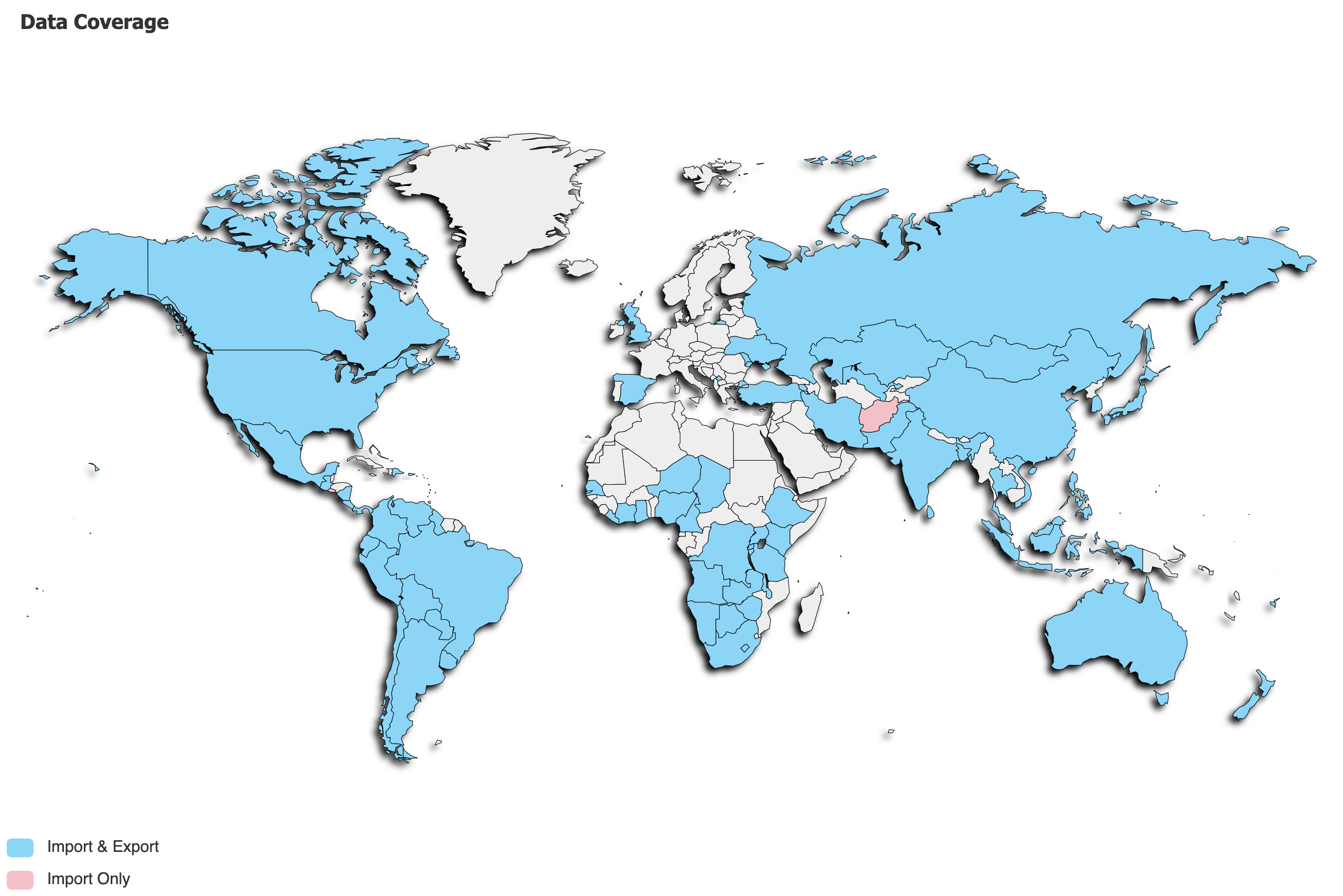
Types of Trade Data We Provide
Our data offerings include single-trade data (import/export/transshipment), bill of lading data (import/export), statistical data (import/export), directory data (import/export), and various special data sets.
Each category provides different information, features unique characteristics, and delivers distinct value.
Customs Declaration Data
Customs Declaration Data refers to import or export records filed with customs authorities during the clearance process.
These records typically include details such as product descriptions, HS codes, quantities, declared values, countries of origin or destination, and the names of importers or exporters.
Because the information is sourced directly from customs, it is highly structured, standardized, and reliable—making it useful for market analysis, trade monitoring, and compliance research.
Bill of Lading Data
Bill of Lading Data is derived from the shipping documents issued by carriers when goods are transported internationally.
This data usually includes shipper and consignee information (or NVOCC data), cargo descriptions, container numbers, departure and arrival ports, vessel details, and shipping dates.
Compared with customs data, bill of lading data emphasizes logistics and transportation visibility, helping companies track shipments, monitor competitors, and identify trading relationships.
Statistical Trade Data
Statistical Trade Data is compiled and published by government statistical agencies, showing aggregated import and export volumes and values.
The data is typically broken down by country, product category (HS code), and month or year, but does not include company-level details.
Its strength lies in high coverage and macro-level insight, making it ideal for analyzing market trends, identifying trade patterns, and evaluating overall industry performance.